Digital Marketing Trends Every Business Should Know
Digital marketing continues to evolve rapidly, changing the way businesses connect with customers, generate leads, and increase sales. As technology advances and consumer behavior shifts, staying updated with the latest digital marketing trends is no longer optional—it’s essential. Whether you’re a startup, small business, or established brand, understanding these trends can help you stay ahead of competitors and achieve long-term growth.Digital Marketing Trends
One of the biggest trends is Artificial Intelligence (AI) in Marketing. AI-powered tools help businesses create content, analyze customer behavior, personalize marketing campaigns, and automate repetitive tasks. From AI chatbots providing instant customer support to AI writing assistants generating blog posts and social media captions, businesses are using AI to improve efficiency and customer experience.
Another important trend is Voice Search Optimization. With the increasing use of smart speakers and voice assistants like Siri, Alexa, and Google Assistant, people are searching differently. Businesses should optimize their websites using conversational keywords, answer-based content, and local SEO strategies to improve visibility in voice search results.

Short-form Video Marketing continues to dominate digital platforms. Videos on Instagram Reels, YouTube Shorts, Facebook Reels, and TikTok attract higher engagement than traditional posts. Businesses can use short videos to showcase products, share customer testimonials, provide tutorials, and tell their brand story in a creative and engaging way.
Personalized Marketing has become more powerful than ever. Customers expect brands to understand their preferences and provide relevant recommendations. Using customer data, businesses can send personalized emails, product suggestions, and targeted advertisements that improve engagement and conversion rates Digital Marketing Trends.
The rise of Social Commerce is changing online shopping. Platforms like Instagram, Facebook, and TikTok now allow users to discover and purchase products without leaving the app. Businesses should create engaging product content, collaborate with influencers, and optimize their social media stores to increase sales.
Search Engine Optimization (SEO) remains a critical part of digital marketing. However, modern SEO focuses not only on keywords but also on user experience, helpful content, website speed, mobile responsiveness, and search intent. Businesses that consistently publish valuable, well-optimized content have a better chance of ranking higher on search engines.
Content Marketing continues to be one of the most effective strategies for building trust and authority. Businesses should create informative blogs, videos, infographics, podcasts, and case studies that solve customer problems. High-quality content not only attracts visitors but also encourages them to become loyal customers.
Marketing Automation is helping businesses save time while improving customer engagement.Digital Marketing Trends Automated email sequences, CRM integrations, lead nurturing, and customer segmentation allow marketers to deliver the right message to the right audience at the right time.
Another growing trend is Influencer Marketing, especially partnerships with micro and nano influencers. These creators often have highly engaged audiences, making their recommendations more authentic and effective than traditional advertising.
Privacy-First Marketing is becoming increasingly important as data privacy regulations continue to evolve. Businesses should focus on collecting first-party data, obtaining user consent, and maintaining transparency about how customer information is used. Building trust through ethical data practices can strengthen long-term customer relationships.
Finally,Digital Marketing Trends Data Analytics and Performance Tracking are essential for making informed marketing decisions. Businesses should regularly monitor website traffic, conversion rates, customer behavior, campaign performance, and return on investment (ROI). Using data-driven insights helps marketers optimize campaigns and allocate budgets more effectively.
In conclusion, digital marketing is constantly changing, and businesses that embrace new technologies and strategies are more likely to succeed. By adopting AI, optimizing for voice search, investing in SEO and content marketing, leveraging social commerce, using automation, and focusing on customer experience, businesses can stay competitive in an increasingly digital world. Keeping up with these trends will not only improve brand visibility but also drive sustainable growth and long-term success.
How Businesses Can Prepare for Future Digital Marketing Trends
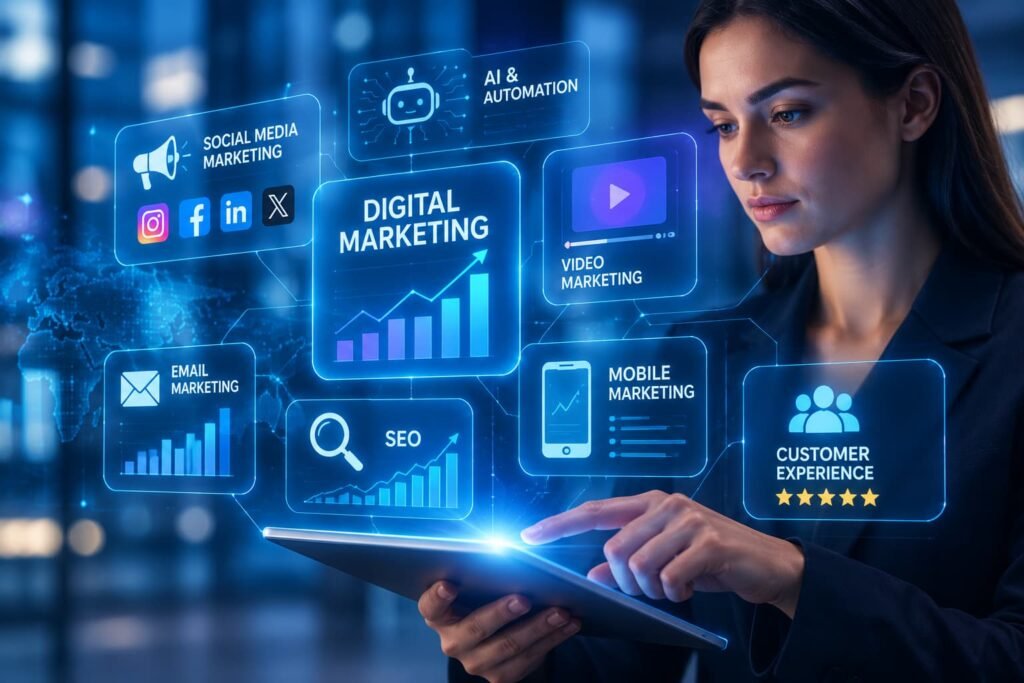
Preparing for future digital marketing trends requires more than simply adopting the latest tools. Businesses need a long-term strategy that focuses on innovation, customer satisfaction, and continuous learning. Companies that regularly analyze market trends and adapt quickly are more likely to outperform competitors in an ever-changing digital landscape.
One of the first steps is investing in employee training and skill development. Digital marketing Trends platforms and algorithms change frequently, making it essential for marketing teams to stay updated with the latest SEO techniques, AI tools, advertising strategies, and social media best practices. Encouraging continuous learning helps businesses remain competitive and improve campaign performance.
Another important strategy is building a strong omnichannel presence. Customers interact with brands across websites, search engines, social media platforms, email, mobile apps, and online marketplaces. Creating a seamless experience across all these channels helps improve customer trust and increases the likelihood of conversions. Consistent branding and messaging across platforms also strengthen brand recognition.
Businesses should also prioritize mobile-first marketing. With most internet users browsing on smartphones, websites must load quickly, offer responsive designs, and provide smooth navigation. Mobile-friendly content, fast checkout processes, and optimized landing pages improve both user experience and search engine rankings.
Customer-generated content is becoming increasingly valuable. Reviews, testimonials, user photos, and social media mentions create social proof that influences purchasing decisions. Encouraging satisfied customers to share their experiences can significantly increase credibility while reducing advertising costs.
Interactive content is Digital Marketing Trends another growing opportunity. Quizzes, polls, surveys, calculators, interactive infographics, and live Q&A sessions encourage users to participate rather than simply consume content. Higher engagement often leads to longer website visits and improved conversion rates.
Email marketing continues to deliver one of the highest returns on investment when done correctly. Instead of sending generic promotional emails, businesses should segment their audience and create personalized campaigns based on customer interests, browsing history, and purchasing behavior. Well-crafted email sequences can nurture leads and strengthen customer relationships over time.
As competition increases, businesses should also invest in building their brand authority. Publishing original research, industry insights, Digital Marketing Trendsexpert interviews, and educational resources positions a company as a trusted source of information. Strong authority not only improves customer trust but also enhances SEO performance through natural backlinks and increased user engagement.
Common Mistakes Businesses Should Avoid
Many businesses fail to achieve their marketing goals because they overlook fundamental principles. One common mistake is focusing solely on selling products instead of providing value. Customers are more likely to engage with brands that educate, entertain, or solve problems before asking for a purchase.
Another mistake is ignoring website performance. Digital Marketing TrendsSlow-loading websites, confusing navigation, broken links, and poor mobile optimization can drive visitors away before they even explore the products or services. Regular website audits help identify and fix these issues.
Some businesses also rely too heavily on a single marketing channel. Depending entirely on one platform—such as social media or paid advertising—can be risky if algorithms change or advertising costs increase. A balanced marketing strategy that includes SEO, email marketing, content marketing, social media, and paid advertising provides greater stability.
Failing to measure campaign performance is another common problem. Without tracking important metrics such as traffic, click-through rates, conversions, and customer acquisition costs, businesses cannot accurately determine which strategies are working. Data-driven decision-making leads toDigital Marketing Trends better marketing results and improved return on investment.
Emerging Technologies Shaping Digital Marketing
Several emerging technologies are expected to influence digital marketing even further in the coming years. Augmented Reality (AR) allows customers to virtually try products before purchasing, improving confidence and reducing return rates. Virtual Reality (VR) creates immersive brand experiences that are especially valuable for industries such as real estate, tourism, education, and retail.
Blockchain technology is also beginning to impact digital advertising by improving transparency, reducing ad fraud, and enhancing data security. Digital Marketing TrendsAlthough still developing, blockchain-based marketing solutions could transform how advertisers verify impressions and protect customer information.
Predictive analytics powered by AI will become increasingly sophisticated. Instead of simply analyzing past customer behavior, predictive models will forecast future purchasing patterns, helping businesses create more effective marketing campaigns and improve inventory planning.
Final Thoughts
The future of digital marketing belongs to businesses that remain flexible, customer-focused, and technology-driven.Digital Marketing Trends While trends will continue to evolve, the core objective remains the same: delivering meaningful value to customers through the right message, at the right time, on the right platform.
Businesses that embrace artificial intelligence, invest in high-quality content, prioritize user experience, optimize for search engines, leverage automation, and make data-driven decisions will be better positioned for sustainable growth.Digital Marketing Trends Rather than chasing every new trend, organizations should focus on adopting technologies and strategies that align with their goals and audience needs. By staying informed and continuously adapting, businesses can build stronger customer relationships, improve brand visibility, and achieve lasting success in the digital marketplace.
Advanced Digital Marketing Strategies for Long-Term Business Growth
Once businesses understand the latest digital marketing trends, the next step is implementing advanced strategies that create sustainable growth. Successful brands don’t simply follow trends—they integrate them into a well-planned marketing ecosystem that consistently attracts, engages, and converts customers.
Create a Customer-Centric Marketing Strategy Digital Marketing Trends
Modern consumers expect brands to understand their needs and provide meaningful experiences. Businesses should map the entire customer journey, from awareness to purchase and post-sale support. Every touchpoint—including website visits, email communication, social media interactions, and customer service—should deliver value and consistency.
A customer-centric strategy also involves collecting feedback regularly. Surveys, reviews, and customer interviews provide valuable insights that help businesses improve products, services, and marketing campaigns.
Invest in High-Quality Evergreen Content
Evergreen content continues to attract traffic long after publication. Unlike seasonal or trending articles, evergreen blog posts remain relevant for months or even years.
Examples of evergreen content include:
- Beginner’s guides
- Step-by-step tutorials
- Frequently Asked Questions (FAQs)
- Industry glossaries
- Product comparisons
- Best practices
- Checklists
- Resource lists
Updating evergreen content periodically helps maintain rankings while improving user experience and search engine visibility.
Build a Strong Email Marketing Funnel
Email marketing remains one of the highest-performing digital marketing channels. Instead of sending random promotional emails, businesses should create automated funnels that guide subscribers through different stages of the buying journey.
A successful email funnel typically includes:
- Welcome emails
- Educational content
- Product recommendations
- Case studies
- Customer testimonials
- Limited-time offers
- Re-engagement campaigns
- Post-purchase follow-ups
This structured approach builds trust while increasing conversion rates.
Strengthen Your Brand Through StorytellingDigital Marketing Trends
People connect with stories more than advertisements. Businesses should share authentic stories about their mission, customers, employees, and achievements.
Storytelling helps humanize a brand and creates emotional connections that encourage customer loyalty. Whether through blog posts, videos, podcasts, or social media, storytelling makes marketing more memorable.
Leverage Community Marketing
Building a loyal community can be more valuable than constantly acquiring new customers. Brands can create communities through:
- Facebook Groups
- LinkedIn Communities
- Discord Servers
- Private Membership Platforms
- Online Forums
- WhatsApp or Telegram Groups
Active communities encourage discussions, generate user-created content, and increase long-term customer retention.
The Growing Importance of First-Party Data
With increasing privacy regulations and the decline of third-party cookies, Digital Marketing Trendsbusinesses must prioritize first-party data collection.
First-party data includes information collected directly from customers through:
- Website registrations
- Newsletter subscriptions
- Customer surveys
- Purchase history
- Loyalty programs
- Contact forms
- Mobile applications
Unlike third-party data, first-party information is more accurate, privacy-friendly, and valuable for personalized marketing campaigns.
How Machine Learning Improves Digital Marketing Trends
Machine learning is becoming an essential component of modern digital marketing. It enables systems to learn from customer behavior and continuously improve marketing performance without constant manual adjustments.
Applications include:
- Predicting customer purchases
- Detecting fraudulent clicks
- Improving search results
- Personalizing website content
- Optimizing advertising bids
- Recommending products
- Forecasting customer lifetime value
Businesses using machine learning gain faster insights and improve campaign efficiency.
Sustainable and Ethical Digital Marketing
Consumers increasingly prefer businesses that demonstrate transparency, honesty, and social responsibilityDigital Marketing Trends.
Ethical digital marketing includes:
- Honest advertising
- Transparent pricing
- Respecting customer privacy
- Avoiding misleading headlines
- Providing accurate product information
- Supporting sustainability initiatives
- Practicing inclusive marketing
Brands that build trust through ethical marketing often enjoy stronger customer loyalty and positive word-of-mouth referrals.
Digital Marketing Trends Skills Every Business Team Should Develop
As technology evolves, marketing professionals need diverse skill sets.
Essential skills include:
- Search Engine Optimization (SEO)
- Content Writing
- Copywriting
- Social Media Marketing
- Email Marketing
- Google Ads
- Analytics and Reporting
- Data Visualization
- AI Tool Management
- Marketing Automation
- Graphic Design Basics
- Video Editing
- Conversion Rate Optimization (CRO)
- Customer Relationship Management (CRM)
Continuous learning helps marketing teams adapt to industry changes more effectively.
Future Predictions for Digital Marketing Beyond 2026
The future of digital marketing Trends will likely focus on deeper personalization, smarter automation, and immersive customer experiences.
Some expected developments include:
- AI-powered marketing assistants managing entire campaigns.
- Hyper-personalized websites adapting in real time to each visitor.
- Increased use of augmented reality for online shopping.
- More conversational search through AI assistants.
- Advanced predictive analytics improving marketing decisions.
- Greater emphasis on privacy-focused advertising.
- Wider adoption of interactive and immersive content.
- Smarter marketing automation powered by generative AI.
- Expansion of visual search technologies.
- Stronger integration between e-commerce platforms and social media.
Businesses that begin preparing today will have a competitive advantage as these innovations become mainstream.
Final Key Takeaways
To remain competitive in today’s digital economy, businesses should focus on these essential principles:
- Put customers at the center of every marketing decision.
- Invest in AI while maintaining human creativity.
- Create valuable, search-optimized content consistently.
- Build trust through transparency and ethical practices.
- Use analytics to guide marketing decisions.
- Diversify marketing channels instead of relying on one platform.
- Automate repetitive tasks to improve efficiency.
- Prioritize mobile experiences and website performance.
- Continuously test, learn, and optimize campaigns.
- Stay informed about emerging technologies and evolving consumer behavior.
Digital marketing is not a one-time effort but an ongoing process of learning, adapting, and innovating. Businesses that embrace change, invest in the right technologies, and consistently provide value to their audience will be well-positioned for sustained success in an increasingly digital world.

Leave a Reply